
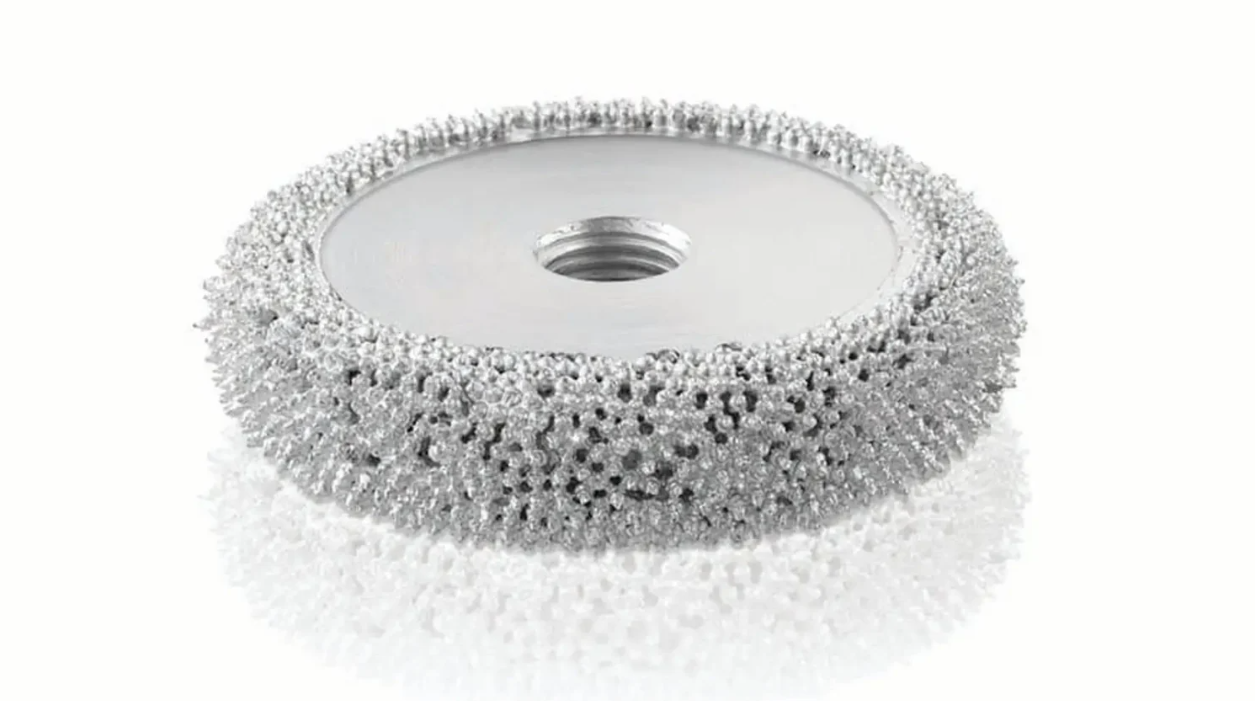
Tire repair preparation often requires more precision than broad buffing can provide. The objective is to remove damaged rubber while preserving as much sound material as practical. Tire skiving wheels are designed for this type of controlled work, giving technicians compact cutting profiles for shaping repair areas and preparing surfaces for subsequent procedures.
What Skiving Means in Tire Repair
Skiving is the controlled removal of rubber from a defined area of a tire. The process removes damaged material, exposes an injury for inspection, or creates the shape needed for repair. Unlike broad tread buffing, skiving concentrates cutting around a specific section.
Preparation requires enough rubber removal to establish a clean working area without unnecessarily enlarging the injury. This makes control particularly important when working around localized damage or areas requiring detailed preparation.
Choosing the Right Working Profile
Shaft-mounted tools can include spherical profiles, tapered designs, rotor saws, and nail hole reamers. Each configuration provides a different working surface and suits particular preparation requirements.
Spherical and tapered profiles can support localized high-tread skiving, while a rotor saw provides a more defined cutting configuration. Smaller spherical tools can be useful for chamfering around inner-liner injuries before patch or patch-stem installation. A nail hole reamer is intended for more specialized preparation of appropriate injuries.
Selecting tire skiving wheels according to the injury can improve control and reduce unnecessary rubber removal. This approach also makes tool selection more deliberate when repair areas differ in size and shape.
Why Compact Tools Improve Access
Repair areas are not always easy to reach with larger equipment. A compact shaft-mounted accessory can provide a narrower working profile, helping the operator approach confined sections without disturbing as much surrounding rubber.
The referenced 14 shaft tools use a 1/4-inch shaft and are offered in several configurations. The range includes spherical tools in 5/8-, 7/8-, and 1-1/8-inch sizes, tapered tools in 5/8- and 7/8-inch sizes, a 1-3/8-inch rotor saw, and a 1/4-inch nail hole reamer.
Matching Size to the Repair
Diameter can influence both access and the amount of surface contacted during cutting. With tire skiving wheels, choosing a diameter that matches the repair area can make movement more controlled.
The technician should consider the repair dimensions, location, cavity shape, and amount of rubber to remove. The goal is controlled preparation. An unnecessarily large profile can make detailed work harder.
Operating Speed and Technique
The manufacturer's recommended operating parameters should always guide tool use. The referenced 1/4-inch shaft tools have a recommended maximum speed of 25,000 RPM. Proper handling of tire skiving wheels helps maintain a consistent cutting path.
Excessive pressure can increase cutting intensity and accelerate accessory wear, while holding the tool in one location for too long can create an uneven surface. Smooth movements and observation of the working area help maintain control.
Before use, technicians should inspect the tool and equipment. Unexpected vibration, unusual cutting behavior, or visible damage warrants stopping and checking the setup.
Where These Tools Fit Into a Workflow
Skiving is one stage within a broader tire repair process. The technician assesses the injury, determines the damaged area, selects an appropriate preparation method, and removes unwanted rubber to establish the required profile.
Maintaining a selection of tire retreading tools can support different preparation tasks because no single geometry is suited to every injury. Keeping specialized profiles available also allows technicians to choose based on access, surface area, and the type of material removal required.
Conclusion
Effective tire preparation depends on controlled material removal, suitable tool geometry, and consistent operating technique. Compact shaft-mounted accessories can be particularly useful when a repair requires detailed work in a restricted area. The different spherical, tapered, saw, and reamer configurations allow technicians to approach specific applications with a more suitable working profile. Understanding the relationship between tool size, injury geometry, access, and operating speed can help produce more consistent preparation while avoiding unnecessary removal of sound rubber. For repair facilities, selecting appropriate tire retreading tools can further support a systematic approach to different preparation requirements.